
Written exclusively for zoos.media – September 9, 2026. By: Dr. Kerstin Alexandra Dörnath
In her column WildLifeGaze, veterinarian Dr. Kerstin Alexandra Dörnath looks at the Xoloitzcuintle – and in the process, she feels ashamed of Germany’s obsession with regulation.

In the Sign of the Xoloitzcuintle: The Sacred Dog
How Mexico Celebrates its National Heritage – and Why, as an Invited Veterinarian and Guest of Honour, I Am Ashamed of German Over-Regulation
Robust, Vital, Healthy Heritage
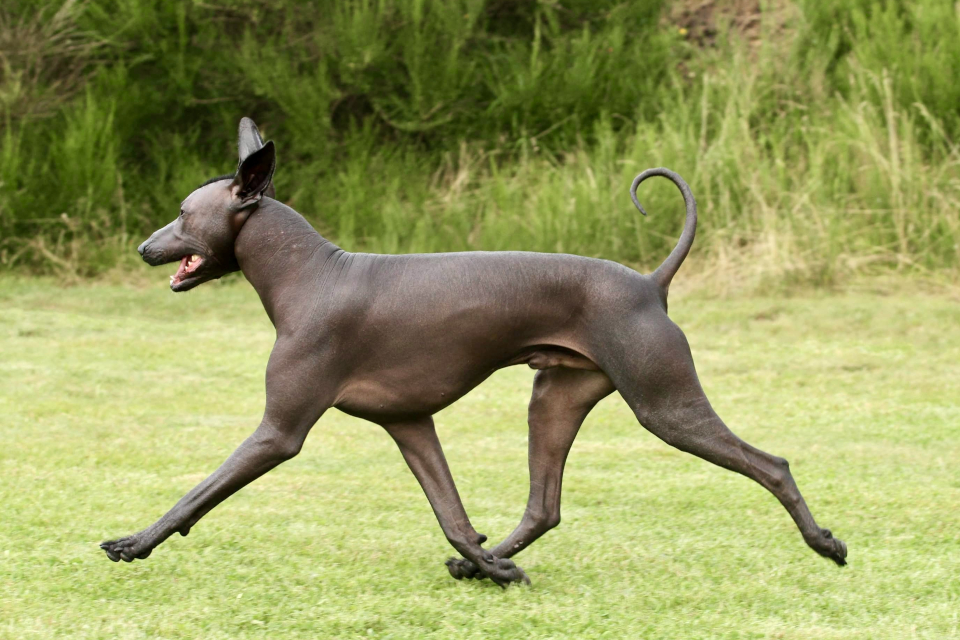
There are creatures whose existence is deeply woven into the mythology and survival of entire cultures. The Xoloitzcuintle is such a being – having walked this earth for millennia: robust, vital, and healthy, endowed with an evolutionary strength that distinguishes it to this day. Even the Maya and Aztecs kept this extraordinary dog by their side.
The very name reveals its intended divine lineage: it is a compound of “Xolotl”, the Aztec god of lightning, thunder, and the underworld, and “itzcuintli”, the word for dog. In one of its two varieties, it displays fascinating coat and dentition peculiarities that underline its uniqueness. It is a dog that, thanks to its nature, can even survive as a stray – a true symbol of life.
Deep Roots in Mexican Identity
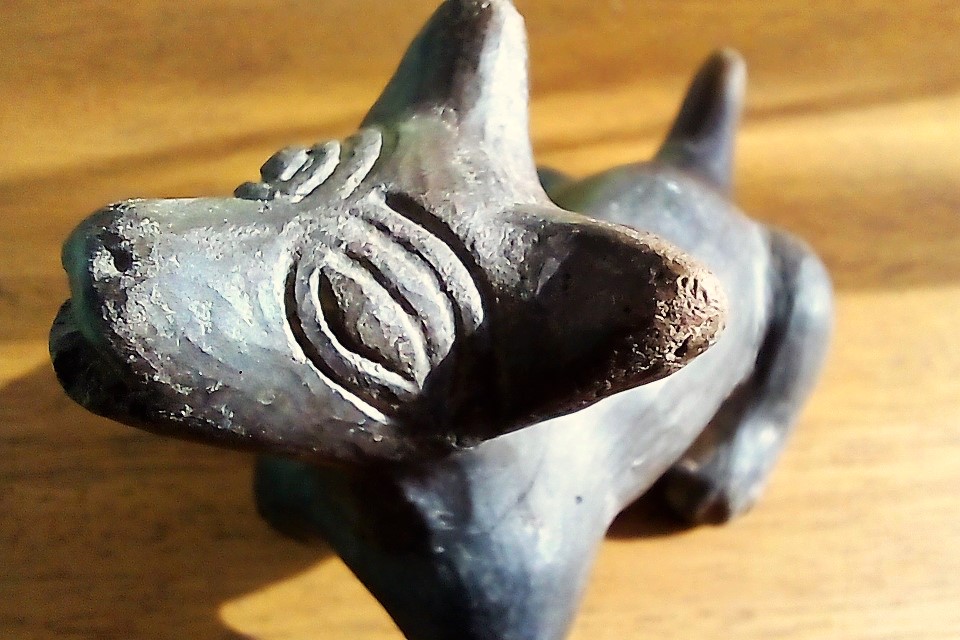
To comprehend the outstanding significance this animal held and holds for the peoples of Mesoamerica, one must understand that this special dog was not merely a beloved, loyal companion to the ancient Mesoamerican cultures, but was deeply anchored in their spiritual system.
Belief holds that the Xoloitzcuintle, as the emissary of Xolotl, safely guides the deceased into the afterlife. In this sacred context, this encompassed not only its role as a companion dog into the beyond, but also as a sacrificial hound. Alongside its spiritual destiny as a soul-guide, healer of ailments, and warming companion, the Xoloitzcuintle in Aztec culture also served temporarily as a ritual food animal.
To this day, Mexicans deeply love and honour the Xoloitzcuintle, albeit differently: it is no longer sacrificed. The Xoloitzcuintle remains a traditional, living hot-water bottle, and healing powers for various illnesses and pain relief are still attributed to it. The belief in it as a guardian over death persists to this day.
Cultural Heritage and Symbol
For a decade, the Xoloitzcuintle has been an official symbol of Mexico City. In 2016, it was officially declared “cultural heritage and symbol” of the capital by its then mayor. This impressively underscores the high standing this dog enjoys there.
Its outstanding importance is reflected today in its service as a police dog in Mexico City. Moreover, in Tijuana, the Xoloitzcuintle is not only the official mascot but also the namesake of a well-known professional football club: Club Tijuana is officially named “Club Tijuana Xoloitzcuintles de Caliente”, and the team is universally known as “Los Xolos“.

On the Brink of Extinction
Yet this invaluable cultural heritage was almost completely wiped out by Europeans. In the wake of the arrival of the Conquistadors and historical colonialism, the Xoloitzcuintle stood on the brink of extinction in Mexico. That it has survived to this day in all its splendour is due not least to artistic giants such as Frida Kahlo and Diego Rivera, who during their lifetimes brought it out of the shadow of the so-called dark centuries and protected it.
These centuries following colonisation, during which indigenous culture, rituals, and indeed the Xoloitzcuintle were suppressed and persecuted as supposedly “pagan” or inferior, are quite rightly described in Mexican historiography and cultural history as a dark epoch. When Frida Kahlo and Diego Rivera brought it into focus and celebrated it in their art and their lives, they truly rescued this sacred dog from that historical shadow into the bright light of modern Mexican identity, known as “Mexicanidad” or “Mexicahidad”.
Mexicanidad
Mexicanidad or Mexicahidad denotes the cultural, historical, and philosophical awareness of the Mexican heritage – with a particularly strong focus on pre-Columbian roots (such as the Aztecs or Mexica, Maya, and other ancient high cultures).
It is far more than mere national pride: it stands for the conscious return to indigenous identity, one’s own history, myths, art, and ways of life that were suppressed or marginalised for centuries by Spanish colonisation. When one speaks in modern Mexico of Mexicanidad or Mexicahidad, one means the deep, proud connection to the country’s indigenous heritage – precisely what the Xoloitzcuintle embodies as a living cultural asset. Whoever turns against the Xoloitzcuintle also turns against Mexicanidad.
Coronation: Día Nacional del Xoloitzcuintle
Now, this venerable historical breed is experiencing its long-overdue, official coronation: upon the initiative of Mexican parliamentarian Diputada Ana Erika Santana González, a dedicated national memorial day has been brought to life for this sacred hound: the Día Nacional del Xoloitzcuintle.
This day was unanimously adopted across all parliamentary factions in the federal parliament (Cámara de Diputados) in 2026 and will henceforth take place annually on the 27th of October. Given its unanimity, this represents an unprecedented event and thus an outstanding resolution by the Mexican parliament.
A Week of Celebrations
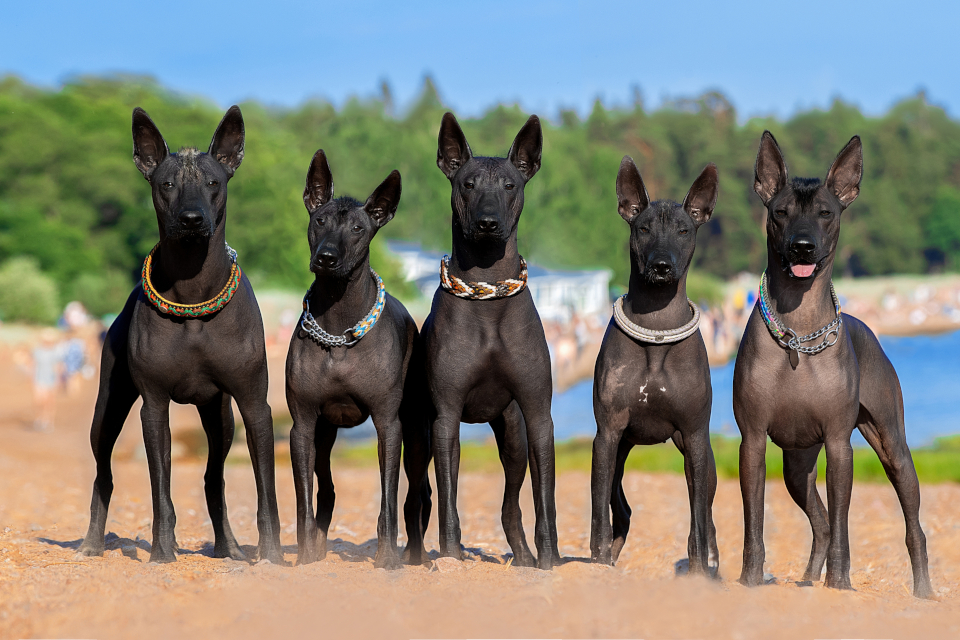
The week-long celebrations dedicated to the Xoloitzcuintle in Mexico City mark a historical milestone for the protection and appreciation of the national heritage. The accompanying official forum in Mexico City unfolds a comprehensive, high-calibre programme that places the biological, scientific, historical, political, and cultural facets of this unique dog breed centre stage. And the outlook reaches further ahead: in Mexico, the next major step is already being planned to grant this national heritage its ultimate status – following the example of Peru, where the Viringo, also called the Sacred Inca Dog or Peruvian Inca Orchid, is firmly anchored in the constitution as a protected animal.
A Plea for Forgiveness
Upon the personal invitation of Diputada Ana Erika Santana González – the parliamentarian who paved the official way for the Xoloitzcuintle’s national memorial day with her pioneering initiative – my path led me to Mexico City to contribute on-site as a speaker, panellist, and guest of honour. At this historic event, I had the privilege of making a substantial contribution to this venerable gathering alongside political decision-makers, cynologists, and fellow scientists in the opening round, “Mesa 1”.
There, upon international soil, deep gratitude was nevertheless blended with unmistakable bitterness and shame. Whilst Mexico celebrates the authentic foundation of these robust hounds, I stood there upon the podium as an invited veterinarian from Germany and begged forgiveness for the present situation: under the guise of animal welfare, incomprehensible actions are currently being perpetrated by authorities and politicians in Germany, which is why I view the whole matter as deeply colonialist and humbly apologised for it. Certain quarters in Germany claim that the Xoloitzcuintle suffers due to its coat and dentition peculiarities.
As early as 2024, I stood as an independent expert before the Committee for Food, Agriculture, and Consumer Protection of the German Bundestag regarding the planned amendment to the Animal Welfare Act, pointing out emphatically that this is not the case. Then as now, there and here, I firmly uphold the professional, fact-based conviction that neither the Xoloitzcuintle nor its relatives such as the Viringo or the Chinese Crested Dog may ever be classified as animals under Paragraph 11b of the German Animal Welfare Act – it is and would be an extraneous classification that is utterly absurd given the robustness, vitality, and health of these breeds.
These dogs are the absolute antithesis of what people here at home attempt to combat through warped administrative guidelines, otherworldly directives, and ideologically watered-down information sheets: they are vital, robust, and healthy. Spaying and neutering orders directed at individuals belonging to one of the oldest dog breeds are bizarre, foolish, and ludicrous; and this coming from official veterinarians who can mostly neither spell nor even pronounce the word “Xoloitzcuintle”. In Germany, the minds of authorities and politicians are systematically washed to manufacture artificial problems while genuine vitality is suppressed.
Protection Against Neocolonialism

The Xoloitzcuintle and the way it is treated in Mexico demonstrate to us what true survival and respect for the creature – indeed, for nature itself – look like, far removed from German pedantry and red tape. And thus, in a sad continuity, a modern neocolonial circle closes: back then, it was the European Conquistadors who almost annihilated this cultural and biological heritage – and today, Europeans are attempting it once more, this time originating from German bureaucratic offices with their out-of-control regulatory mania and eurocentric dogmatism.
Let us protect this special dog from this modern colonialism! Hopefully, the existing misinformation regarding the Xoloitzcuintle will be cleared up at the highest diplomatic level, and these baseless “information sheets” will find their way to where they belong: upon the rubbish heap of history. Never again must there be a dark era for Mexico triggered by Europeans.
In Ciudad de México, I was fortunately able to deepen the scientific and animal-welfare alliance and respectfully advance both culture and animal protection.
